Red-light camera images can be powerful proof of who ran the light, but in California they do not last long. Under SB 720, images from the new camera programs must be destroyed within five business days if no ticket is issued, and records are confidential unless released by subpoena, court order, or as required by law. If you were in an intersection crash, act fast, look for other video sources, and get a lawyer involved early.
In a red-light crash, the best witness is often not a person. It is a camera mounted on a pole above the intersection. And in California, that witness can lose its memory in less than a week. If you were hurt in a red light camera accident in California, your best evidence may already be fading.
Insurance companies know the stakes. They know intersection crashes often come down to two drivers swearing they had the green. They know that without hard proof, they can split fault down the middle and pay you less. And they know that most injured people have no idea camera records are destroyed so quickly.
This article explains how red-light cameras work under California’s newest law, why the footage disappears, and how to use it, or replace it, to prove what really happened.
Why Red-Light Crashes Turn Into “He Said, She Said”
Intersection crashes are among the hardest to prove because both drivers often claim they had the green light. Without video or strong witnesses, insurers may split fault between the drivers, which reduces what the injured person recovers under California’s comparative fault rules.
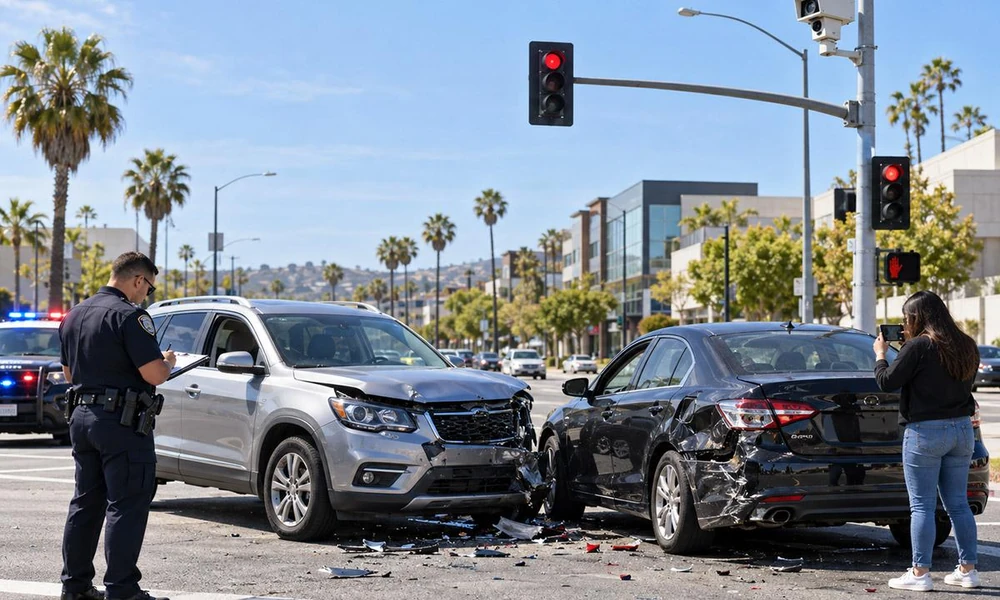
Picture a typical crash at a busy intersection in Santa Ana or Riverside. One driver says the light was green. The other says it was yellow, then swears it was green too. The witnesses who stopped have already driven away. The police report says “conflicting statements.”
That is precisely where insurers like to be. California uses a “pure comparative fault” system. That means each driver’s share of blame is weighed, and your compensation is reduced by your share. If an adjuster can convince everyone it was 50/50, they cut your claim in half without proving anything.
It is not that the adjuster believes you were careless. It is that uncertainty is cheaper for them than the truth. The fix is evidence, and the strongest evidence in an intersection crash is often video.
How California’s Red-Light Camera System Works Now
California now has two kinds of red-light camera programs. Older programs issue traffic tickets under Vehicle Code section 21455.5. Under SB 720, which took effect in 2026, cities and counties can also run a new civil program with lower fines, no license points, and strict limits on how records are used.
SB 720 created what lawmakers call the “Safer Streets Program.” Senator Ashby’s office describes it as an opt-in system that lets local governments use automated red-light enforcement, with revenue going toward pedestrian, cyclist, and traffic safety improvements.
The details are in the bill text. Under the new program, penalties start at $100 for a first violation and rise for repeat violations. Violations do not add points to a driver’s record or affect their license. The cameras photograph rear license plates, and facial recognition is prohibited.
Older programs under Vehicle Code section 21455.5 can still operate side by side with the new ones. Over the years, many Orange County and Inland Empire cities have used red-light cameras, and SB 720 gives every city the option to add them. You or your attorney should check whether a specific intersection has a working camera today.
The Five-Day Problem: Why Camera Footage Disappears
Under SB 720, if a camera captures images but no ticket is issued, those images must be destroyed within five business days. Even when a ticket is issued, records are kept only for limited periods. They are also confidential, released only as required by law, by court order, or in response to a subpoena.
This is the part most people never hear about. Lawmakers built strong privacy protections into SB 720 so cameras could not be used to track ordinary drivers. Those protections make sense. But they also mean the window to save evidence from your crash can be shockingly short.
Think about what that means in real life. You are in the emergency room. You spend the next few days dealing with pain, doctor visits, a rental car, and phone calls from adjusters. By the time you think to ask about the camera, you may have already lost the footage.
Even when the system issues a ticket, the law limits how long the records are kept after the ticket is resolved. And because they are confidential, you cannot simply call city hall and ask for a copy.
The camera saw everything. The law gives you only days to make sure anyone else does.
That is not a reason to panic. It is a reason to move quickly and to have someone on your side who knows how to ask for the right records in the right way.
Can Red-Light Camera Footage Be Used in a California Accident Claim?
Yes, red-light camera images can be used as evidence of fault, but getting them requires the right legal process. Because records are confidential, they are generally obtained through a subpoena or court order. Acting quickly is essential, since images may be destroyed within days if no ticket is issued.
The first step is a preservation request. As soon as possible, your attorney can contact the city or county that runs the camera and ask that any records from the time and place of your crash be preserved. That notice puts the agency on alert that the records may be needed in litigation.
The next step is the formal request itself. Because SB 720 allows release in response to a subpoena or court order, these tools are usually how the images are obtained in an injury case. The process takes some time, which is exactly why the preservation request has to come first.
What if the other driver got a ticket from the camera? That can be useful, but it is not the whole story. In many situations, the ticket itself may not be admissible as proof of fault in a civil injury case. The underlying images, timestamps, and signal data are what carry the real weight. They show the light, the car, and the moment.
If the evidence shows the other driver ran a red light, that violation may also support a presumption of negligence under California’s “negligence per se” rule in Evidence Code section 669. In plain English, breaking a safety law that causes the kind of harm the law was meant to prevent can be treated as proof of carelessness.
When the Camera Missed It: Other Evidence That Proves Who Ran the Light
Many intersections have no red-light camera, and some cameras only record when they detect a violation. Fortunately, other evidence can fill the gap, including business and doorbell cameras, dashcams, traffic signal timing records, witness statements, and data from the vehicles themselves.
Most intersections in Anaheim, Corona, and across the region are surrounded by potential evidence that has nothing to do with the city’s cameras. The challenge is the same: much of it is recorded over days or weeks. This is the one place a list helps:
- Business security cameras at gas stations, banks, and shopping centers facing the intersection
- Doorbell and home cameras on nearby residential streets
- Dashcams in your car, the other car, or vehicles that stopped to help
- Traffic signal timing records from the city, which show the exact light sequence
- Vehicle event data recorders, sometimes called “black boxes,” which store speed and braking data
- Witness statements, especially from people with no connection to either driver
- Rideshare and delivery apps, if a commercial driver was involved
Signal timing records deserve special mention. They do not show the crash, but combined with witness accounts and vehicle data, they can prove that one driver’s version of events is impossible. That kind of evidence can turn a “he said, she said” crash into a clear case.
What Changes When Someone Moves Fast on Your Behalf
When an attorney gets involved early, the evidence picture changes. Preservation letters go out within days, not weeks. Nearby businesses are contacted before their footage is overwritten. Signal records and vehicle data are requested in the proper form. And the insurer loses its favorite argument: that nobody can really know who ran the light.
Speed also protects your legal deadline. Most California personal injury lawsuits must be filed within two years under Code of Civil Procedure section 335.1. But in an intersection crash, the evidence deadline arrives long before the legal one.
None of these factors guarantees a particular outcome. Every crash is different. But injured people who preserve evidence early are in a far stronger position than those who wait and hope the facts speak for themselves.
The Bottom Line
The red-light camera may have captured the truth about your crash, but California law gives it a very short memory. If you were hurt in an intersection crash, assume the clock is running from day one. Ask about cameras, look for other video, and get help preserving records before they disappear.
Whether your crash happened in Anaheim, Santa Ana, Riverside, or Corona, our car accident lawyers know how to move fast when evidence is on the line.
Been in an accident or hurt on the job? You don’t have to navigate insurance companies alone. Oracle Law Firm fights to get you the compensation, control, and clarity you deserve.
Get a Free Consultation or call 888.597.4099.
Disclaimer: This article is for general information only and is not legal advice. Reading it does not create an attorney-client relationship. Every case depends on its own facts, and past results do not guarantee future outcomes. For advice about your situation, speak with a licensed California attorney.
Frequently Asked Questions
Can red-light camera footage be used to prove fault in a car accident?
Yes. Red-light camera images and data can show which driver entered the intersection on red, which is strong evidence of fault. Because these records are confidential in California, they are generally obtained through a subpoena or court order, so it is important to act quickly.
How long does California keep red-light camera footage?
Under SB 720, images from the new civil camera programs must be destroyed within five business days if no ticket is issued. If a ticket is issued, records are kept only for limited periods after it is resolved. Older programs also limit how long records are kept, so assume the window is short.
How do I get red-light camera footage after a crash?
Start by asking an attorney to send a preservation request to the city or county that runs the camera as soon as possible. Because the records are confidential, they are usually released only in response to a subpoena, a court order, or as otherwise required by law.
What if there was no red-light camera at the intersection?
Other evidence can still prove who ran the light. Business security cameras, doorbell cameras, dashcams, traffic signal timing records, vehicle event data, and independent witnesses can all help. Much of this evidence is recorded over quickly, so it should be requested right away.
What happens if both drivers say they had a green light?
Without clear evidence, insurers may try to split fault between the drivers. California’s pure comparative fault rule reduces each person’s recovery by their share of blame, so evidence like video, signal records, and witness statements can make a major difference in what you recover.